GRIDLOCK
Pile height
Pile height is the length of the turf blades. Shorter pile stands up better to heavy traffic and is easier to rinse, while taller pile looks fuller and softer. For most Buckeye lawns, a medium pile of roughly 1.25 to 1.75 inches is a good balance. Putting greens use a much shorter, tighter turf so the ball rolls true. HOAs sometimes specify an acceptable range, so check before you choose.
Face weight and density
Face weight is the weight of the blades in one square yard, in ounces. A higher number usually means more blades and a denser, fuller look. It isn't the only spec that matters. Blade shape affects how the turf springs back after being walked on, and a thatch layer (short, curly, often tan fibers near the base) helps turf look like a real lawn and stand upright.
Backing and drainage
Turf backing holds the blades in place and controls how water drains. Many products use a backing with punched drainage holes, while others use a fully permeable backing that drains across the whole surface. For pet areas, faster, more even drainage matters most. Drainage also depends on the base underneath: a compacted crushed-rock base lets water move down instead of pooling.
Infill: silica, zeolite, and cooling options
- Silica sand: a common infill that weighs the turf down, supports the blades, and protects the backing from sun.
- Zeolite: a natural mineral used in pet areas because it traps ammonia, the main source of urine odor.
- Coated and cooling infills: products designed to hold moisture or reflect heat, to help lower surface temperatures after rinsing.
Heat: the honest answer
Artificial turf gets hot in direct summer sun, much hotter than natural grass, and surface temperatures can climb well above the air temperature on a Buckeye afternoon. It's the most common question we get, and it's worth planning for. Lighter turf colors, cooling infills, shade trees or structures, and rinsing before use all help. Many families use turf in the morning and evening in July and August, the same way they use a patio.
Landscape, pet, or putting turf?
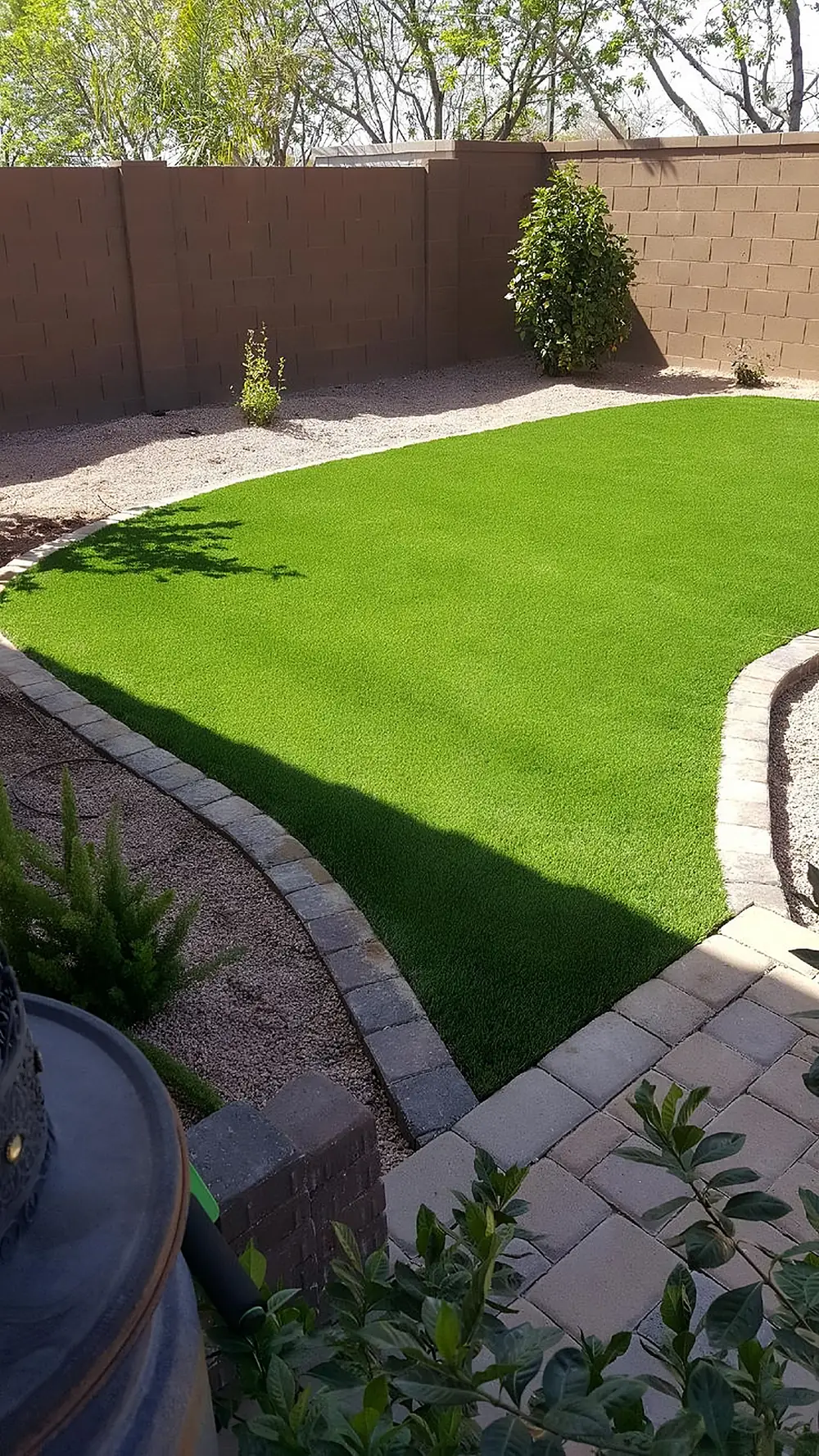
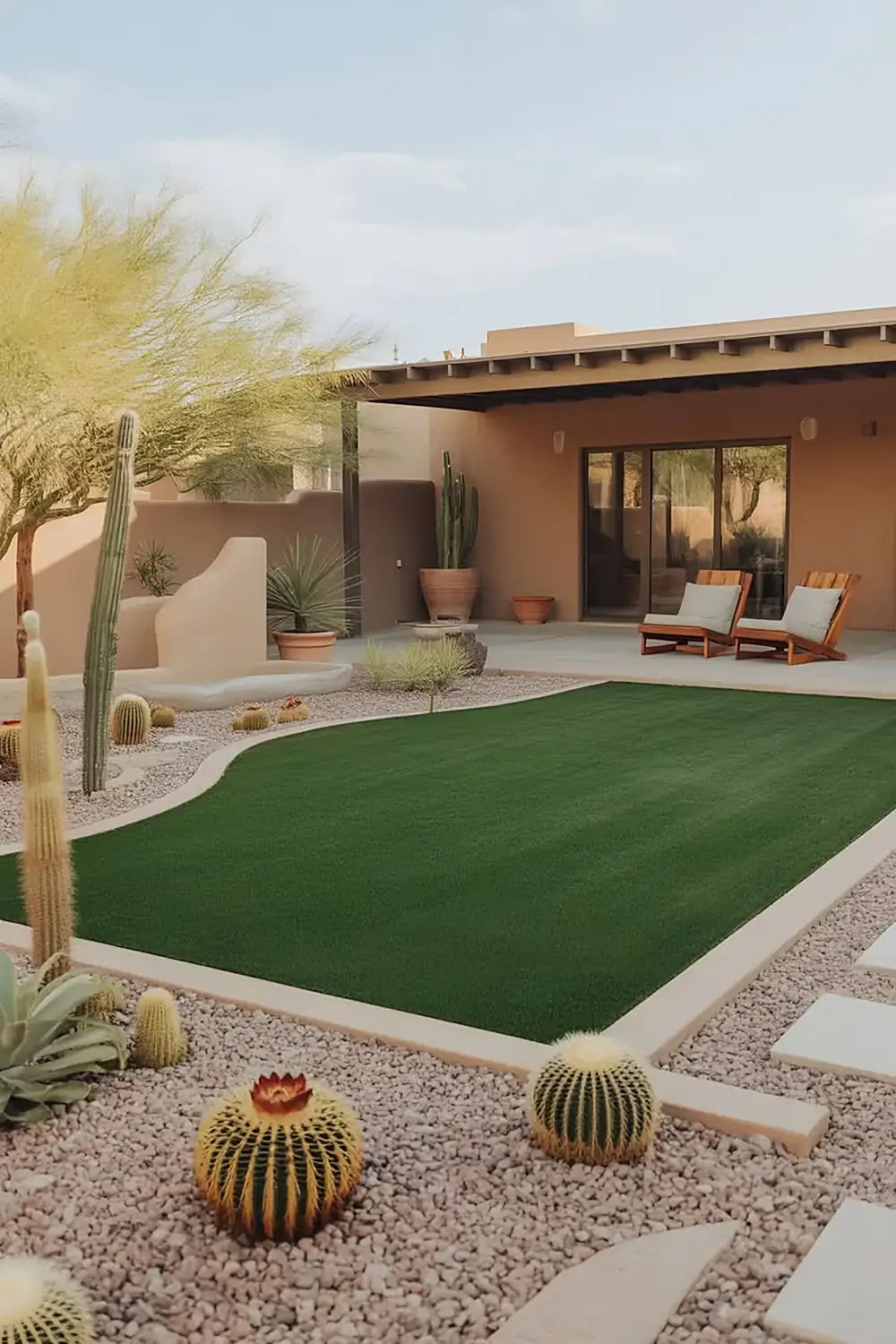
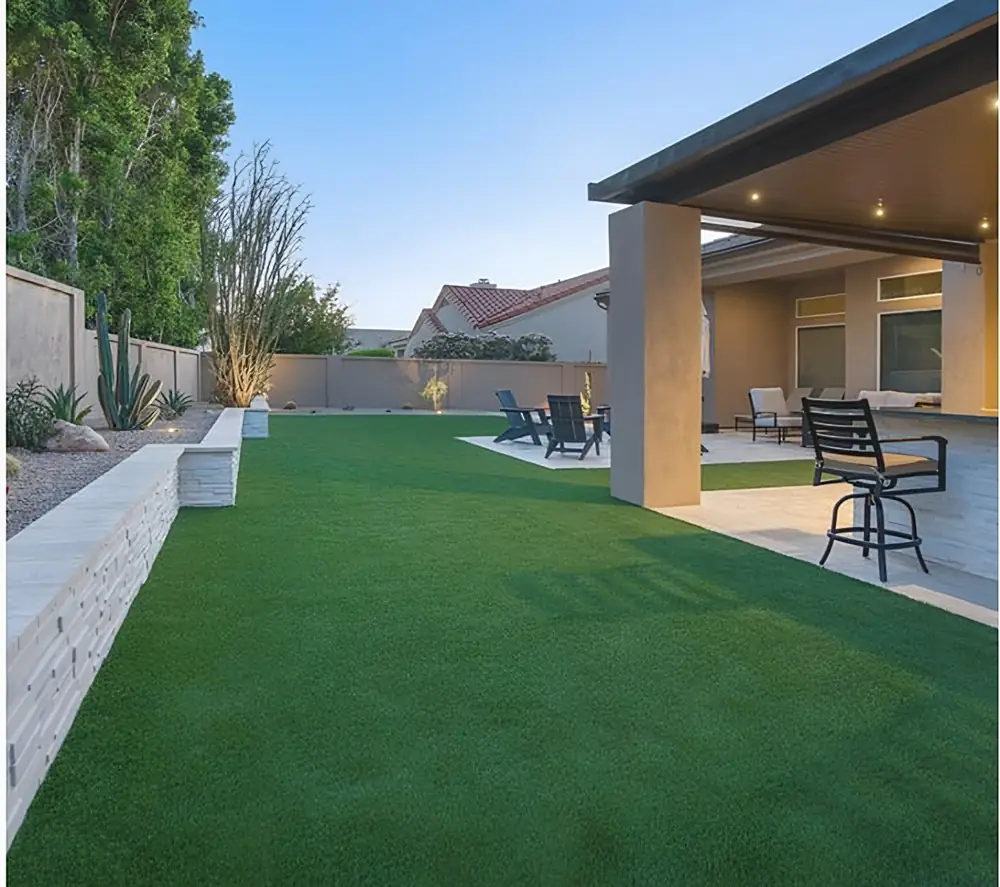
- Landscape turf: the standard lawn look, with mixed greens and thatch. Best for front yards and general backyards.
- Pet turf: built for drainage and odor control, usually with a shorter, tougher pile and zeolite infill. Learn about pet turf →
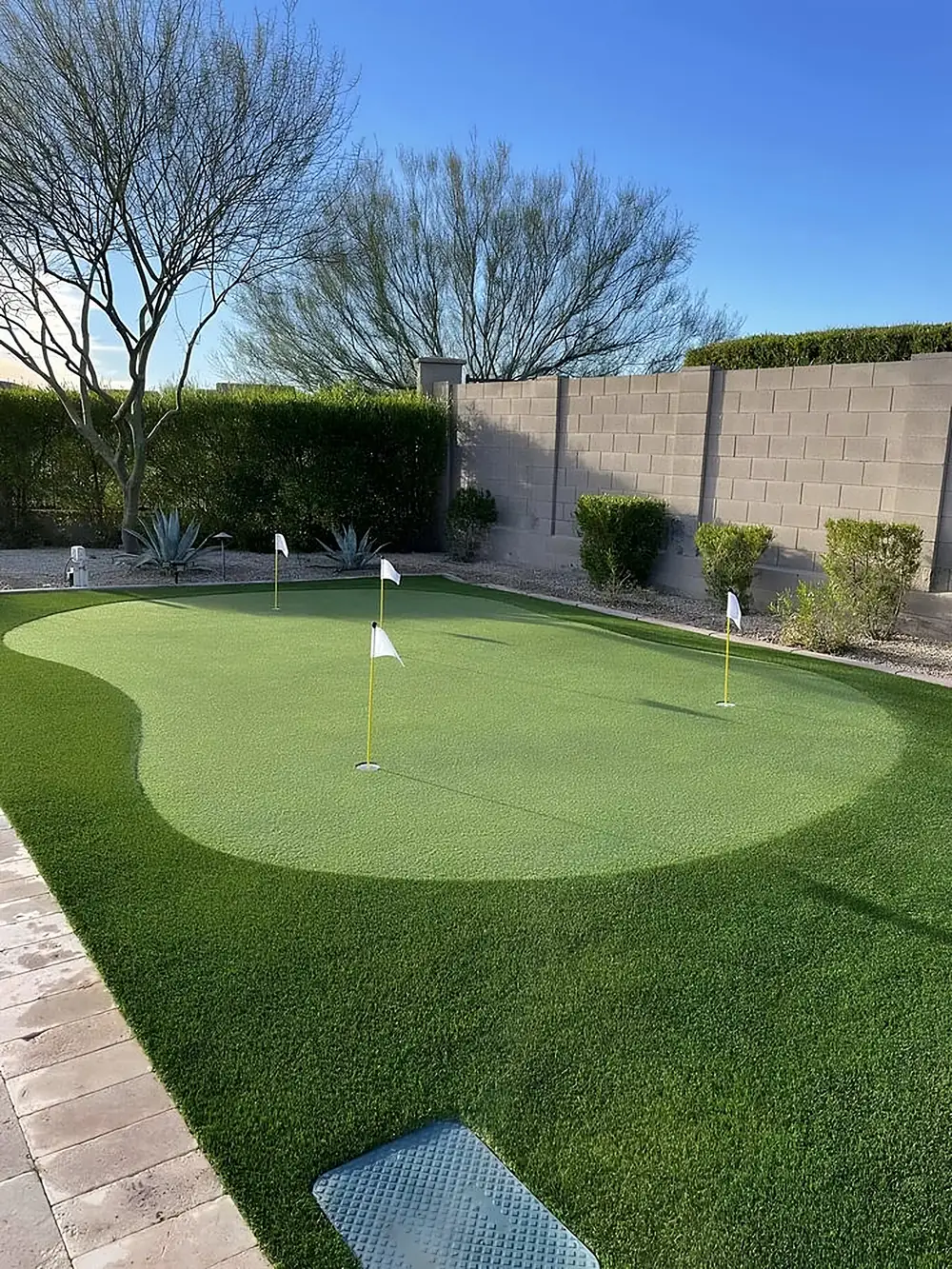
- Putting turf: short, dense, and smooth so a ball rolls true. Learn about putting greens →
What "starting at" includes
Our starting price covers a standard installation: removing existing grass or debris, grading, a compacted base, a weed barrier, the turf itself cut, seamed, and secured, infill, and cleanup. Premium turf, pet or putting products, slopes, caliche, and long hauls can change the price, which is why every quote comes after a free on-site estimate.
Installs starting at $5.50/sq ft — the most competitive pricing in Buckeye. Call for a free quote.
Quality turf typically lasts 15–20+ years in Arizona sun.