GRIDLOCK
How pet turf drains
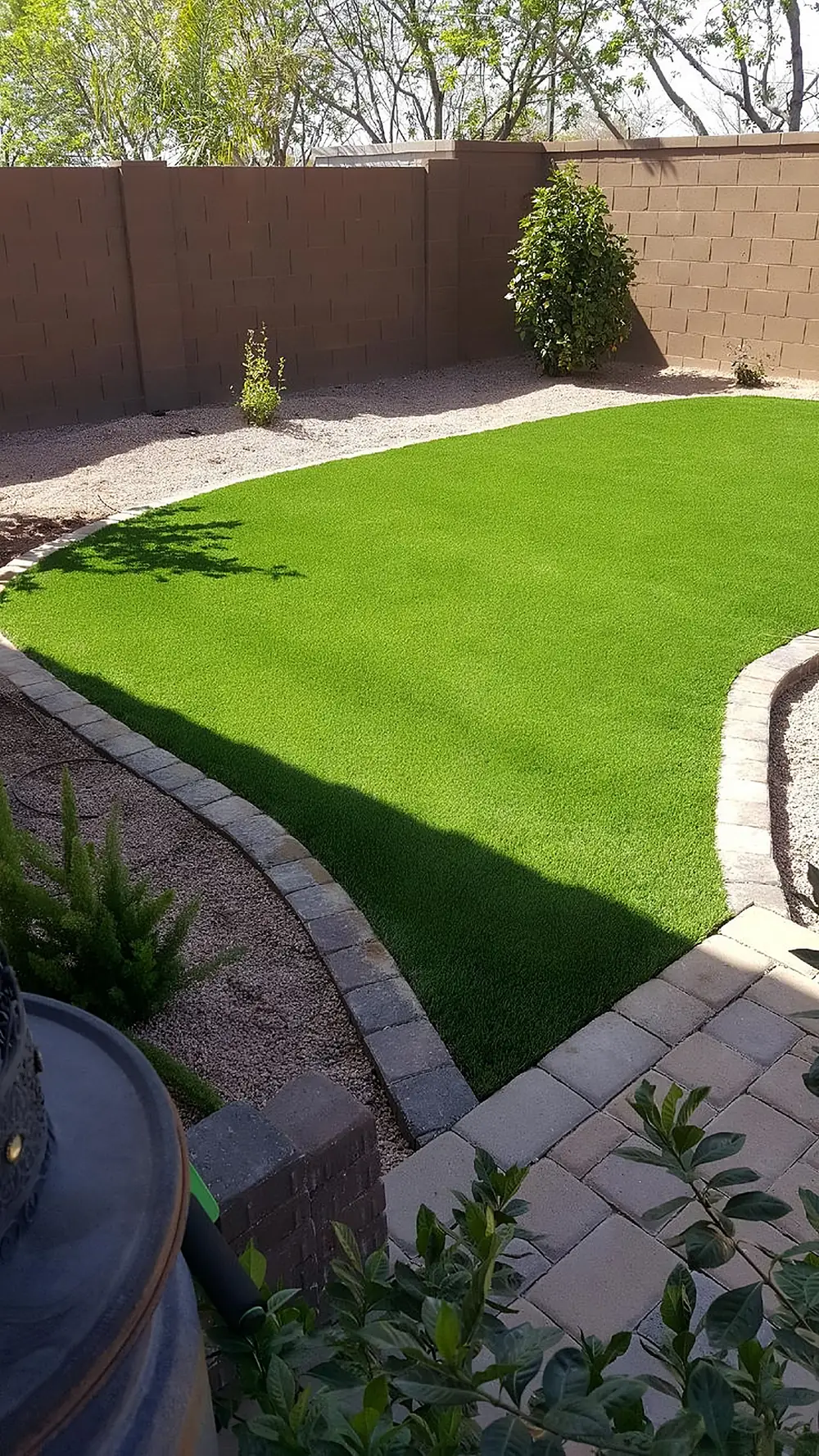
Pet turf uses a backing that lets liquid pass straight through instead of sitting on the surface. Under it, a compacted base of crushed rock lets that liquid drain down into the ground. Some pet turf products use a fully permeable backing rather than punched drainage holes, which spreads drainage evenly across the whole surface. We'll show you the options and their drainage specs at your estimate.
Odor control that actually works
- Zeolite infill: a natural mineral that traps ammonia, the main source of urine odor, between rinses.
- Enzyme cleaner: an enzyme-based turf cleaner breaks down odor at the source. Use it on the spots dogs use most.
- Rinse routine: hose down the main potty areas every few days in summer and weekly the rest of the year.
- Solid waste: pick it up as you would on grass, then rinse the spot.
Dog-run layouts
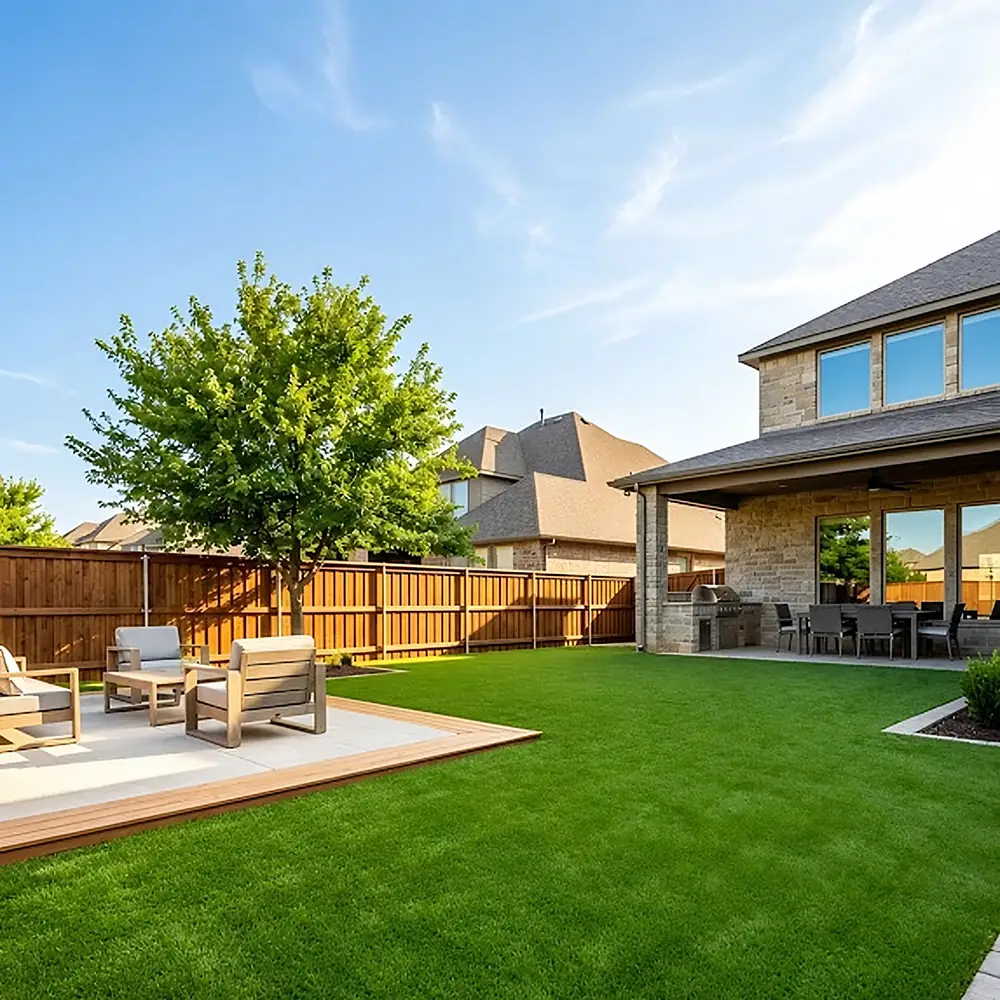
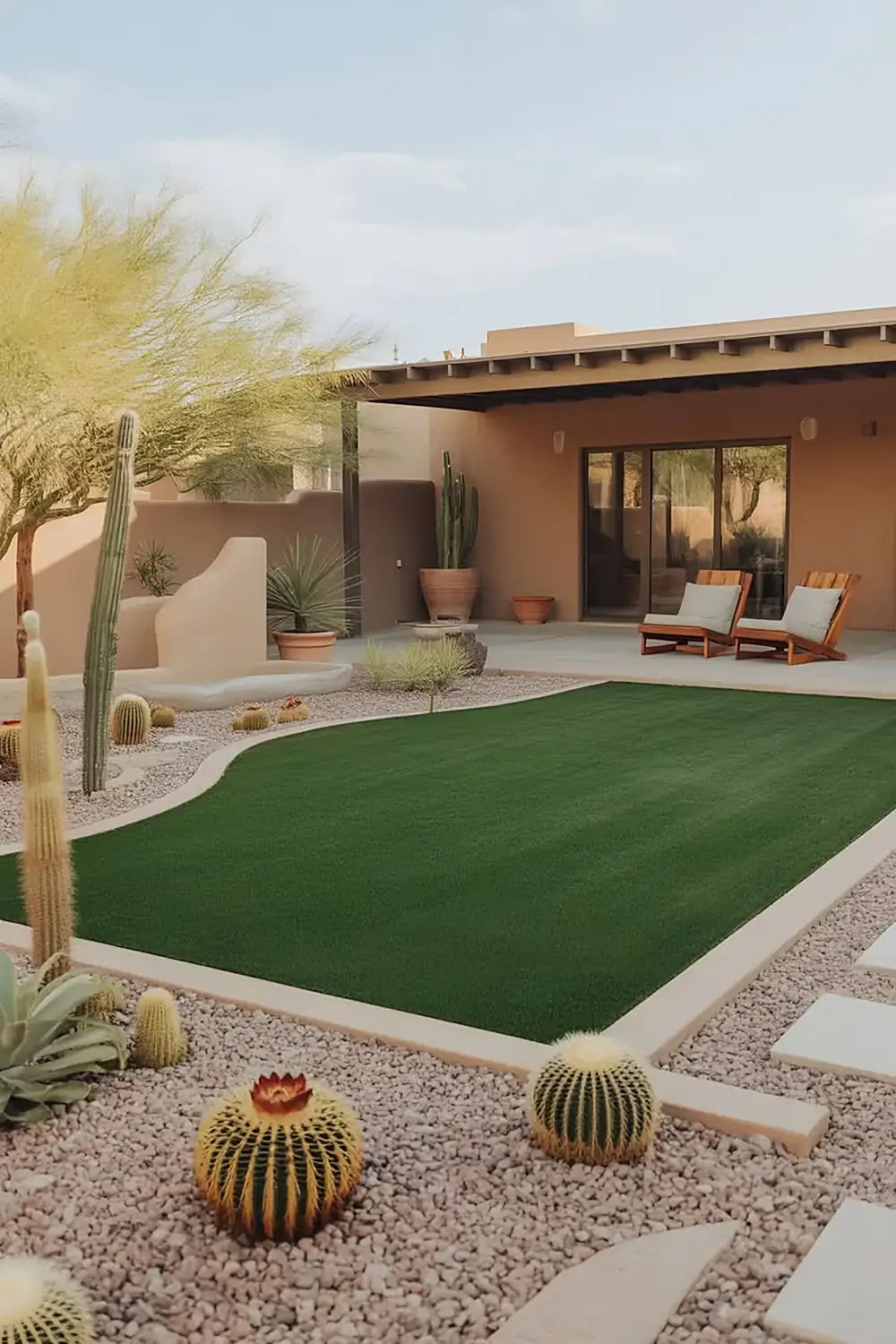
If your dogs have a favorite route along the fence or a regular potty corner, we can put pet turf exactly there and use pavers or gravel elsewhere. A side-yard dog run is common in Buckeye homes: a strip of pet turf behind a gate, easy to rinse, and out of the way of the main patio.
Turf also ends digging and mud. Dogs can still scratch at the surface, but there's no soil to dig into or track inside.
Heat and your pets
Turf gets hot in direct afternoon sun, much hotter than grass. In summer, give dogs shade, rinse the turf to cool it before playtime, and let them out in the morning and evening. Lighter turf colors and cooling infills can help too.
Installs starting at $5.50/sq ft — the most competitive pricing in Buckeye. Call for a free quote.